

Stainless steel bending is a critical metal fabrication process widely used across industries to shape stainless steel components into desired angles and forms without compromising structural integrity.
What Is Stainless Steel Bending?
Stainless steel bending refers to the process of deforming stainless steel sheets, tubes, or profiles into specific angles or curves using mechanical force. Unlike cutting or welding, bending preserves the material’s continuity and surface finish, making it a preferred method for creating durable and visually clean components.
The process relies on applying controlled stress beyond the material’s yield point but below its fracture point, allowing it to retain the new shape permanently.
Due to stainless steel’s tendency to workharden—becoming harder and more brittle with deformation—bending requires careful planning, appropriate tooling, and often intermediate annealing (heat treatment) to restore ductility. The most common grades used in bending include 304 and 316, which offer a good balance of formability and corrosion resistance.
Services
Fabrication workshops and metalworking companies offer a range of bending services tailored to different project requirements:
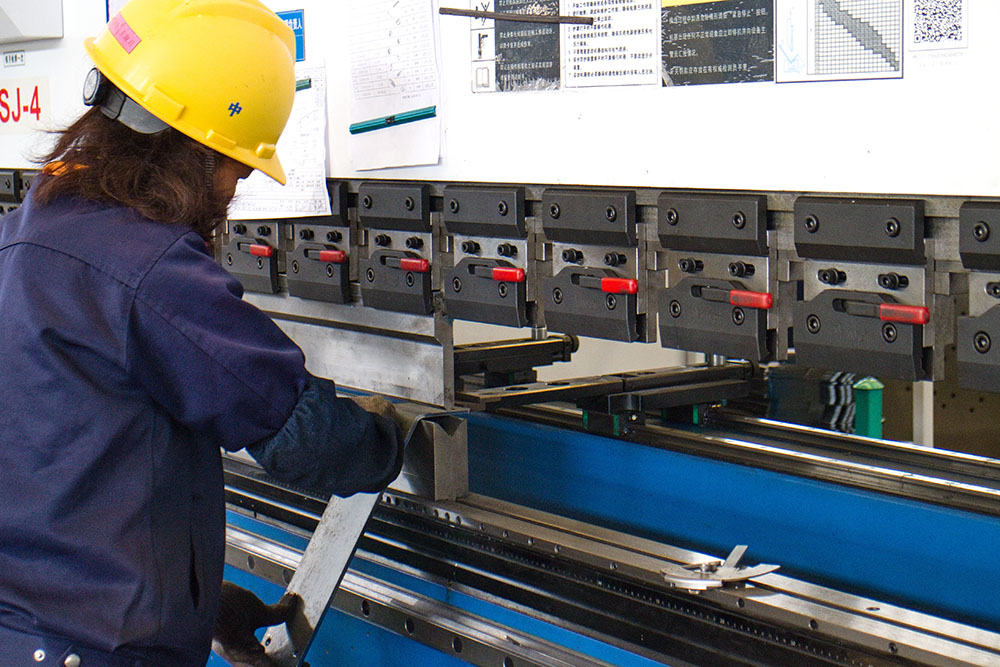
Sheet Metal Bending: Used for flat stainless steel sheets, typically with press brakes. Ideal for enclosures, panels, and brackets.
Tube and Pipe Bending: Specialized for cylindrical sections, used in handrails, exhaust systems, and structural frameworks.
Profile Bending: For custom extruded or rolled sections such as channels, angles, and beams.
Precision Bending: Hightolerance bending for aerospace, medical, and electronics applications where exact angles are crucial.
Custom Fabrication Services: Endtoend solutions including design consultation, prototyping, bending, welding, and finishing.
These services are often supported by CNC (Computer Numerical Control) technology, ensuring repeatability, accuracy, and efficiency in production runs.
Types
Several bending techniques are employed depending on the material form, desired geometry, and production volume:
Press Braking (Air Bending, Bottoming, Coining)
Roll Bending
Rotary Bending (Wipe Bending)
Tube Bending (Mandrel, Rotary Draw, Roll, and Compression Bending)
Laser Bending (Laser Forming)
Advantages
Stainless steel bending offers numerous benefits that make it a preferred choice in modern manufacturing:
Preservation of Material Properties
High Strength and Durability
Aesthetic Finish
Corrosion and Heat Resistance
Design Flexibility
Cost Effectiveness
Low Maintenance
Sustainability
Applications
The versatility of stainless steel bending makes it indispensable across numerous industries:
Architecture and Construction
Medical Equipment
Automotive and Transportation
Food and Beverage Industry
Aerospace and Defense
Marine and Offshore
Furniture and Interior Design
Energy Sector
Conclusion
Stainless steel bending is a vital process in modern manufacturing, combining strength, aesthetics, and functionality in a single operation. From simple brackets to complex architectural curves, the ability to shape stainless steel precisely and reliably opens up endless possibilities across industries. With advancements in CNC technology, tooling, and material science, bending techniques continue to evolve, offering higher precision and efficiency.
As demand for sustainable, longlasting, and visually appealing metal solutions grows, stainless steel bending will remain at the forefront of innovation in metal fabrication.
