

Deep Drawing of Sheet Metal: Definition, Process, Advantages, and Applications
Deep drawing is a widely used metal forming process that transforms flat sheet metal blanks into hollow, seamless, three-dimensional shapes. It is one of the most important techniques in the manufacturing industry, especially for producing cylindrical, box-shaped, or complex contoured components.
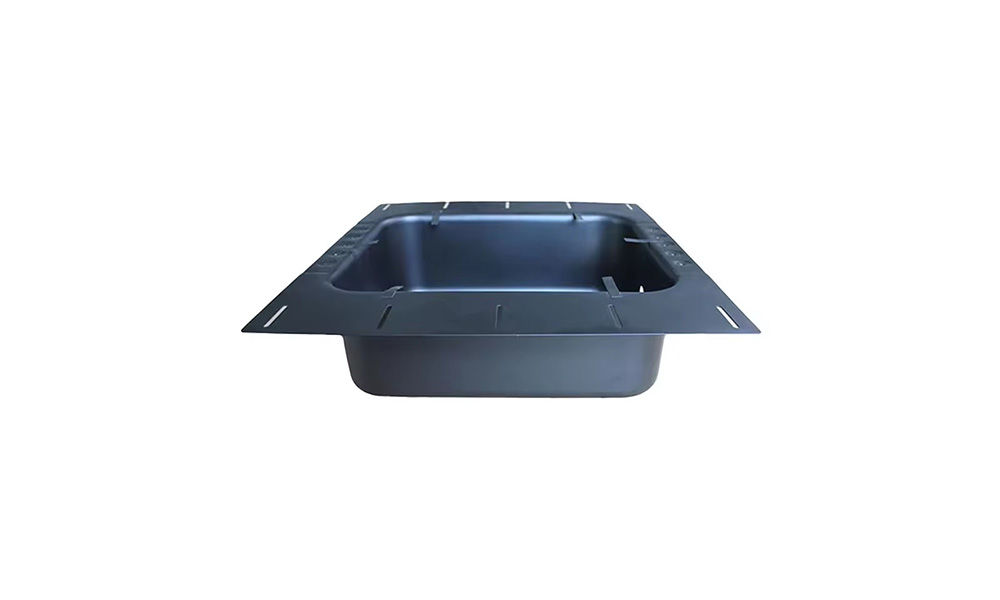
What Is Deep Drawing?
Deep drawing is a cold-forming process where a sheet metal blank is placed over a die cavity and pressed into shape using a punch. When the depth of the drawn part exceeds its diameter, the process is classified as deep drawing. This method stretches the metal without breaking it, allowing manufacturers to produce strong, lightweight, and uniform parts.
Common materials include:
Stainless steel
Carbon or mild steel
Aluminum
Brass
Copper
These materials offer excellent ductility, making them suitable for deep drawing.
How the Deep Drawing Process Works
1. Blank Preparation
A flat sheet (the blank) is cut to the required size.
2. Positioning
The blank is placed on a die and held in place by a blank holder or binder.
3. Punch Action
A punch descends and pushes the blank into the die cavity.
4. Material Flow
Metal stretches and flows radially from the flange area to form the desired shape.
5. Part Release & Finishing
Once the punch retracts, the formed part is removed, trimmed, and finished.
Advanced deep drawing machines can perform multi-step drawing to achieve more complex geometries.
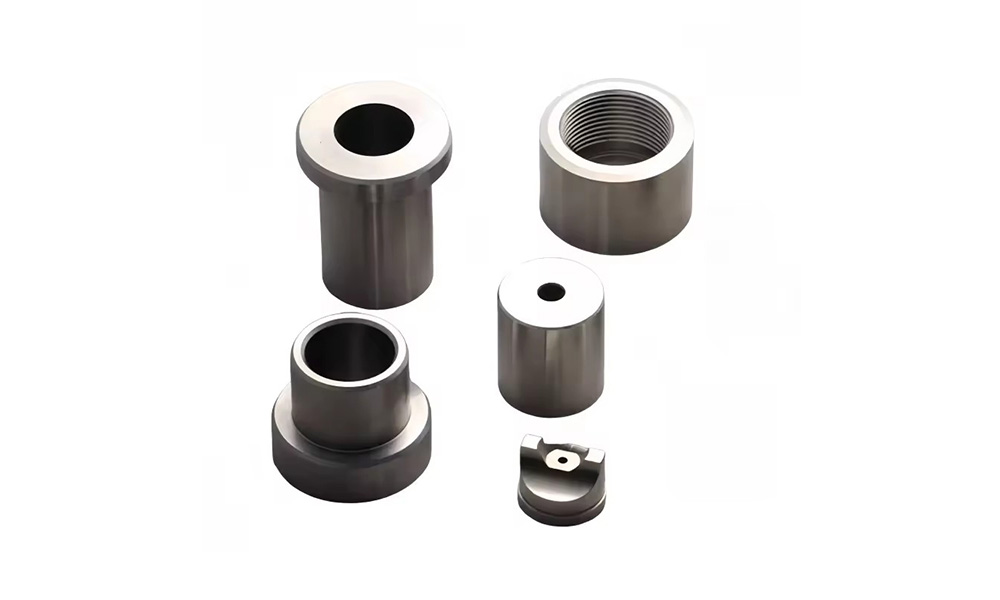
Types of Deep Drawing
Single-Draw Deep Drawing — For shallow or simple shapes
Multi-Stage Deep Drawing — Required for tall or complex parts
Reverse Drawing — Improves part strength and accuracy
Hydroforming Deep Drawing — Uses high-pressure fluid for seamless, wrinkle-free forming
Progressive Die Deep Drawing — High-speed production with multiple forming stations
Advantages of Deep Drawing
High strength due to cold working
Uniform wall thickness and seamless structure
Ability to create lightweight yet durable parts
Cost-efficient for large-volume production
Excellent dimensional accuracy
Supports complex geometries and deep cavities
Because it uses sheet metal efficiently, deep drawing generates minimal waste.
Applications of Deep Drawing
Deep drawing is used across many industries, including:
Automotive
Fuel tanks
Oil filter housings
Brackets and enclosures
Household & Consumer Goods
Kitchen sinks
Cookware (pots, pans, lids)
Food cans
Electronics
Battery housings
Sensor cases
Metal enclosures
Industrial & Mechanical
Pressure vessels
Pump housings
Caps, shells, and casings
Aerospace
Lightweight structural components
High-strength, corrosion-resistant housings
Why Deep Drawing Matters
Deep drawing offers an ideal balance of strength, weight, precision, and cost. With advances in CNC hydraulics, servo-driven presses, and intelligent forming simulation, the process continues to push manufacturing toward higher efficiency and better-quality metal components.
