

Metal stamping is a crucial metal processing technique and holds a significant position in the manufacturing industry. It mainly relies on two core tools, namely the press and the die, to apply external force to raw materials such as metal plates, strips, pipes and profiles.
During this process, the material undergoes plastic deformation or separation, ultimately obtaining the workpiece of the required shape and size, which is what we commonly refer to as a stamping part. Essentially, stamping falls within the category of plastic processing and, together with forging, constitutes the forging and pressing process.
This process is not only widely applied in the automotive field, but also plays an irreplaceable role in industries such as aerospace, electronic appliances, and daily necessities manufacturing. It is an indispensable key technology in modern industrial production.
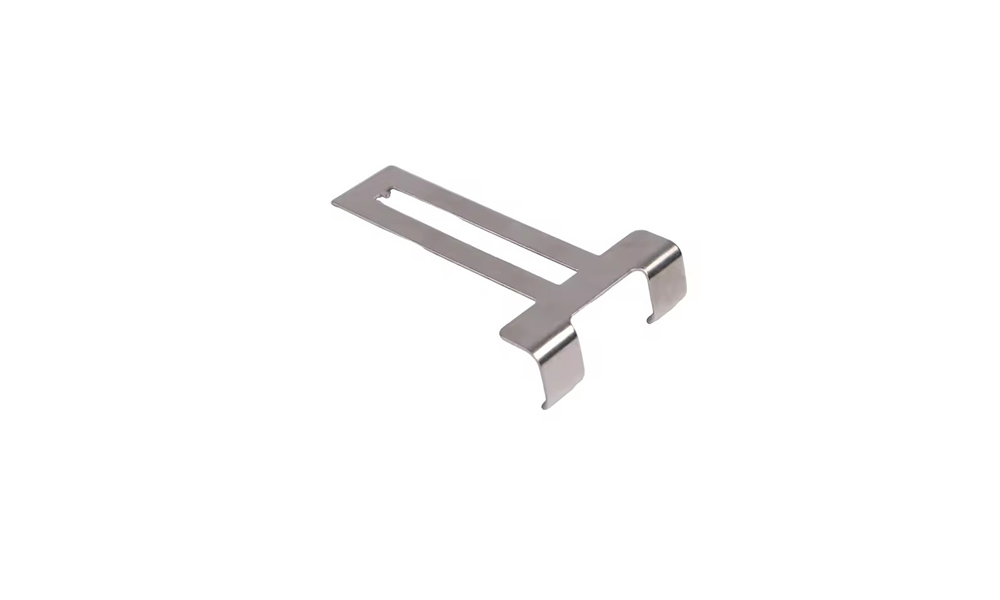
1. The scope of metal stamping services
Metal stamping service is a complex process involving many links. First comes the design stage. Based on the customer's requirements and the product's application, precise mold design is carried out.
This requires full consideration of the material's properties, the product's structure, and the feasibility of the production process. After the design is completed, the mold manufacturing stage begins.
Advanced processing equipment and techniques are adopted to precisely process the mold to ensure its dimensional accuracy and surface quality.
After the mold is manufactured, various metal stamping parts are produced. By using a press, raw materials such as metal sheets are placed in molds.
Through the application of external force, they undergo plastic deformation or separation, and ultimately the required stamping parts are obtained.
Throughout the entire process, it also involves quality inspection, packaging, and after-sales service, etc., to ensure the quality of stamping parts and customer satisfaction, and provide all-round support for the manufacturing needs of all industries.
2. Customized metal stamping services
Metal stamping services have extremely strong customization capabilities. In terms of specifications, we can produce stamping parts of various sizes according to the size requirements of the customer's products.
Whether it is small and precise electronic components or large automotive parts, we can precisely customize them. In terms of shape, with advanced mold design and manufacturing technology, various complex shapes can be processed, such as irregular curved surfaces and special-shaped structures, to meet the appearance design and functional requirements of different products. The material selection is also very flexible.
Commonly used metal materials such as steel, stainless steel, and aluminum alloy can all be used according to customer requirements. Special materials such as titanium alloy and high-strength steel can also be adopted for special needs.
Through customized services, metal stamping enterprises can provide customers with unique product solutions, helping them enhance the competitiveness of their products in their respective fields.
Classification of metal stamping
Classified by stamping temperature
Metal stamping can be classified into cold stamping, warm stamping and hot stamping according to temperature.
Classified by stamping process
The stamping process is divided into two major categories: separation processes and forming processes.
The advantages of metal stamping
High production efficiency
High material utilization rate
The product quality is stable
The application of metal stamping
Application in the automotive industry
Application in the electronics industry
Application in the construction industry
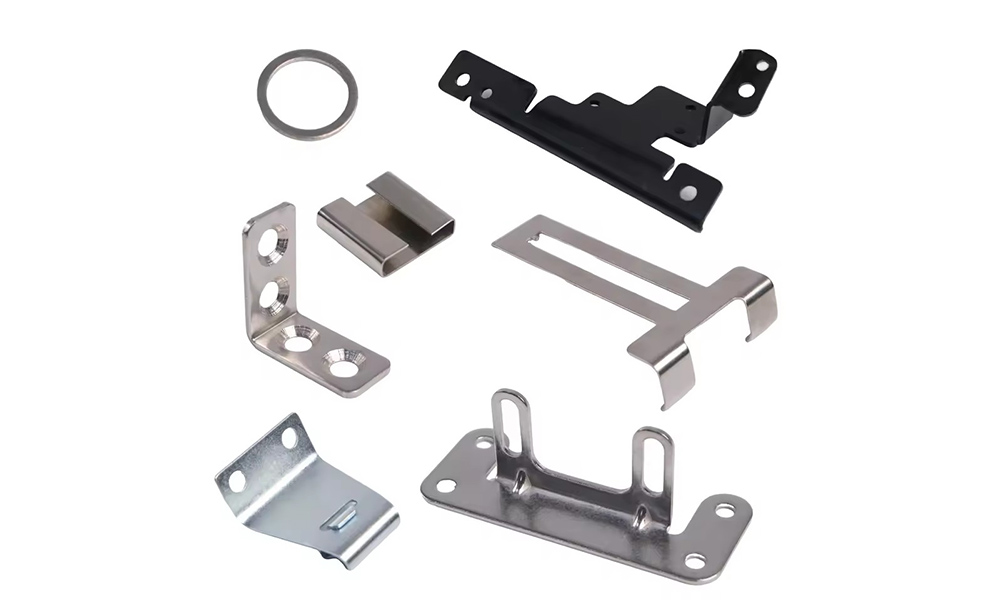
The future development of metal stamping
Application of new technologies
In the field of metal stamping, CAD/CAE/CAM technology is being increasingly and deeply applied. CAD technology can achieve efficient and precise design of molds, while CAE can simulate and analyze the stamping process, identify potential problems in advance, and optimize process parameters.
CAM technology ensures the automation and precision processing of molds. Simulation technology can also simulate material flow, stress and strain, and other conditions during the stamping process, helping engineers better understand the essence of the process, providing a scientific basis for process improvement and optimization, and promoting the development of metal stamping processes towards greater efficiency and higher quality.
Market development trend
The global metal stamping market is developing well. With the continuous development of downstream industries such as automobiles and the application of new technologies, the market prospects are broad.
