

304 vs 316 Stainless Steel: Which Is Better for Outdoor Use?
When choosing stainless steel for outdoor applications, two grades dominate the conversation: 304 and 316 stainless steel. Both are widely used in construction, marine equipment, outdoor furniture, railings, and industrial projects because of their excellent corrosion resistance and durability. However, they are not identical. Understanding the differences between these two materials can help you select the right option for your environment and budget.
What Is 304 Stainless Steel?
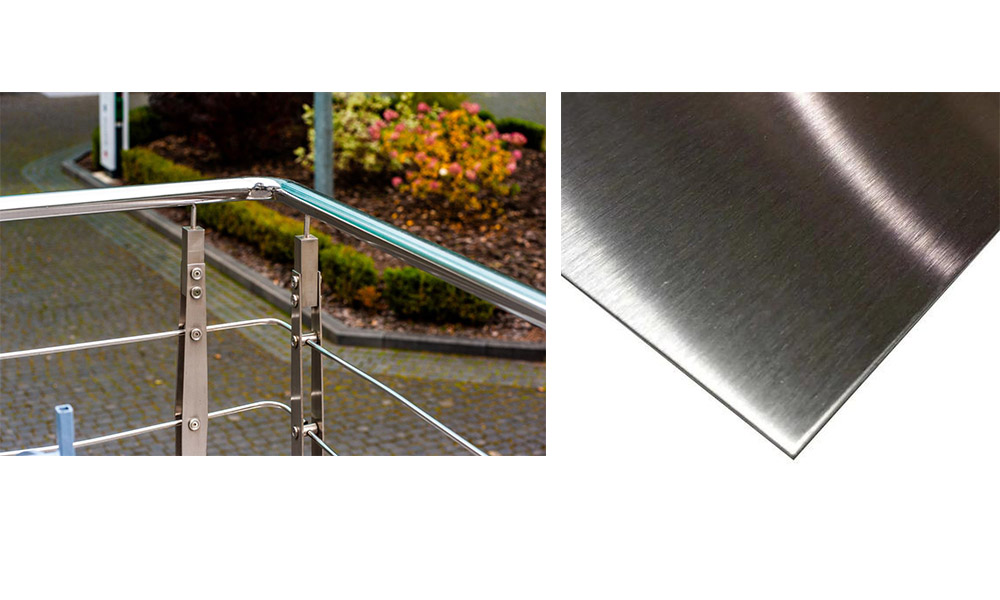
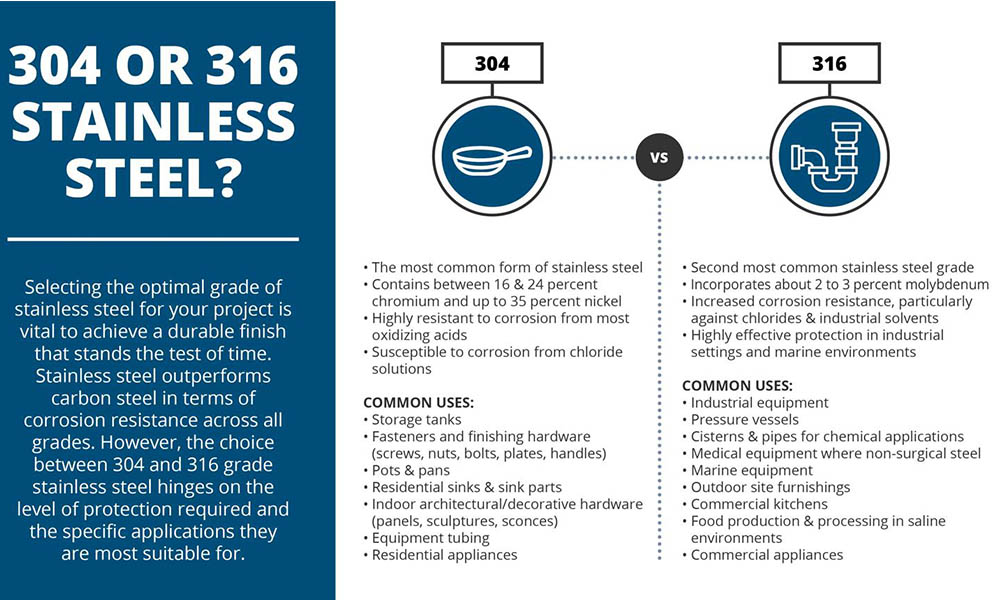
304 stainless steel is the most commonly used stainless steel grade in the world. It belongs to the austenitic stainless steel family and contains approximately 18% chromium and 8% nickel. This composition gives it strong resistance to rust, oxidation, and corrosion in many everyday environments.
Because of its versatility and affordability, 304 stainless steel is frequently used in:
Outdoor furniture
Kitchen appliances
Architectural panels
Food processing equipment
Water tanks
Decorative railings
304 stainless steel performs very well in mild outdoor conditions, especially in urban and inland areas where exposure to salt and harsh chemicals is limited.
What Is 316 Stainless Steel?
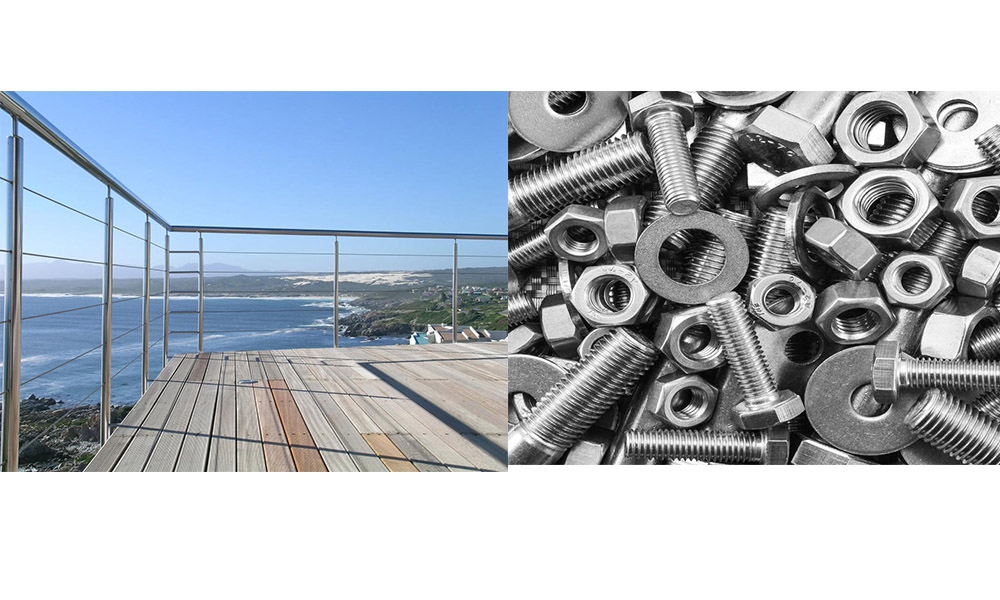
316 stainless steel is similar to 304 but includes an additional element: molybdenum, usually around 2–3%. This extra component significantly improves corrosion resistance, particularly against chlorides and saltwater exposure.
316 stainless steel is commonly used for:
Marine environments
Coastal architecture
Chemical processing equipment
Outdoor structures near saltwater
Medical instruments
High-humidity industrial applications
Because of its enhanced corrosion resistance, 316 is often called “marine-grade stainless steel.”
Key Differences Between 304 and 316 Stainless Steel
1. Corrosion Resistance
The biggest difference between 304 and 316 stainless steel is corrosion resistance.
304 stainless steel resists rust in normal outdoor conditions, but prolonged exposure to saltwater, chlorine, or industrial chemicals can eventually cause corrosion and pitting.
316 stainless steel performs much better in these harsh conditions because molybdenum strengthens its resistance to chlorides and moisture.
If your project is located near the ocean, a swimming pool, or an industrial facility, 316 stainless steel is usually the safer long-term choice.
2. Durability Outdoors
Both materials are strong and durable, but environmental conditions matter greatly.
In dry inland climates, 304 can last for decades with minimal maintenance.
In coastal or high-humidity regions, 316 offers superior long-term durability.
Outdoor installations exposed to rain, humidity, and pollution benefit from the additional protection of 316 stainless steel.
3. Cost
304 stainless steel is more affordable because it does not contain molybdenum. In many cases, it can cost 20–30% less than 316 stainless steel.
For projects with large material requirements, the price difference may be substantial. That is why many homeowners and builders choose 304 for standard outdoor applications where extreme corrosion resistance is unnecessary.
However, choosing a cheaper material in a harsh environment can lead to higher maintenance and replacement costs later.
4. Appearance
Visually, 304 and 316 stainless steel look nearly identical. Both have a clean, modern metallic finish that works well in contemporary architecture and outdoor design.
Without laboratory testing, it is difficult to distinguish one from the other simply by appearance.
5. Maintenance Requirements
304 stainless steel requires regular cleaning in aggressive outdoor environments to prevent staining or corrosion buildup.
316 stainless steel generally needs less maintenance because it naturally withstands salt and chemical exposure more effectively.
For outdoor structures that are difficult to access or clean frequently, 316 may provide better long-term convenience.
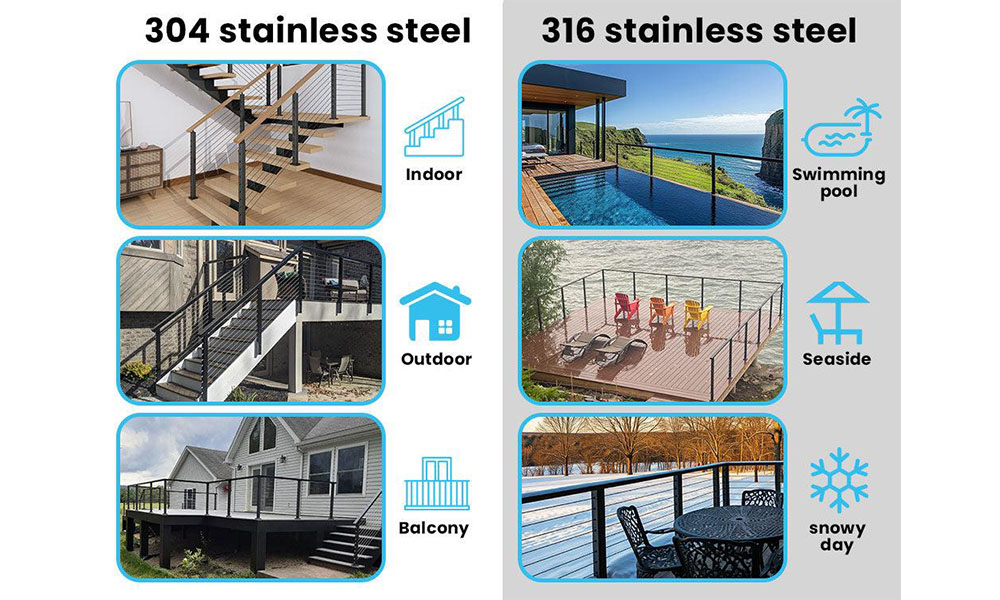
Which Stainless Steel Is Better for Outdoor Use?
The answer depends on where and how the material will be used.
Choose 304 Stainless Steel If:
Your project is inland or in a dry climate
Salt exposure is minimal
You need a cost-effective solution
The application is decorative or light-duty
Regular maintenance is acceptable
Typical examples include backyard furniture, garden fixtures, and standard outdoor railings in non-coastal areas.
Choose 316 Stainless Steel If:
The project is near the ocean or saltwater
The environment contains chlorine or industrial chemicals
High humidity is constant
Long-term corrosion resistance is critical
Maintenance opportunities are limited
316 stainless steel is ideal for docks, marine hardware, coastal railings, and outdoor industrial structures.
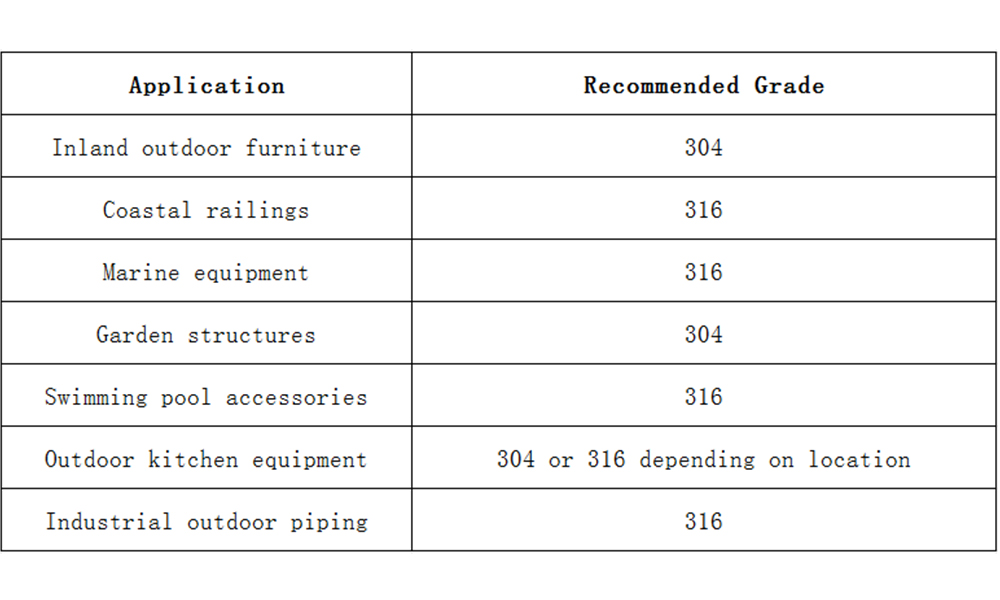
Outdoor Applications Comparison
How to Maximize Stainless Steel Lifespan Outdoors
Regardless of which grade you choose, proper care can greatly extend service life.
Here are several maintenance tips:
Clean surfaces regularly to remove dirt and salt deposits.
Avoid using harsh carbon steel brushes that may contaminate the surface.
Rinse coastal installations with fresh water periodically.
Inspect joints and welds for early signs of corrosion.
Use proper finishing and polishing techniques during installation.
Regular maintenance helps preserve both appearance and structural integrity.
Final Thoughts
Both 304 and 316 stainless steel are excellent materials for outdoor use, but the best choice depends on environmental conditions and project requirements.
304 stainless steel offers a practical and economical solution for most standard outdoor applications. It provides strong corrosion resistance, attractive appearance, and long-term durability in mild environments.
316 stainless steel, on the other hand, delivers superior protection in harsh outdoor conditions, especially near saltwater or chemicals. Although it costs more upfront, its enhanced resistance can reduce maintenance expenses and extend product lifespan over time.
If your outdoor project faces frequent moisture, salt, or chemical exposure, 316 stainless steel is usually worth the investment. For general outdoor use in less aggressive environments, 304 stainless steel remains a reliable and cost-effective option.
